Alternatives to Care Homes for the Elderly in the UK
At a glance
Starting price
From £85,000 fully installed, all-in
Who it suits
Elderly parents, adults with disabilities, young adults with additional needs
Accessibility features available
Level access, wet rooms, wider doorways, adapted kitchen
Is free assisted living available?
Council funding is limited. Most families fund privately.
Next step
Free site survey and fixed price. Call 0800 368 9781.
When a family member starts to need more support, a care home is not the only answer. For many families across the UK, there are better options. Options that keep an elderly parent or grandparent close to home, independent and comfortable, without the cost and disruption of residential care.
This guide covers the main alternatives to care homes available in the UK, what each one involves, and why a self-contained garden annexe is increasingly becoming the preferred choice for families who want to do things differently.
Why Families Are Looking for Alternatives to Care Homes
The decision to move a family member into a care home is never easy. For many families, it feels like the only option when a parent or grandparent can no longer manage fully independently. But it is rarely what anyone actually wants.
The average cost of a care home in the UK is between £35,000 and £55,000 a year. For nursing care, it can be significantly more. Over five to ten years, those costs add up to a sum that could comfortably fund a purpose-built home in your own garden.
Beyond the financial side, there are deeper reasons why families are looking for alternatives. Being separated from family, losing familiar surroundings and giving up independence are all associated with poorer outcomes for elderly people. Research consistently shows that older adults who remain connected to family and community live longer and happier lives.
According to the NHS, staying at home with the right support in place is the preferred option for the majority of older adults in the UK. A well-designed garden annexe makes that possible.
What Are the Alternatives to Care Homes?
There are several meaningful alternatives to care homes for the elderly in the UK. Here is an honest overview of each.
1. A Self-Contained Garden Annexe
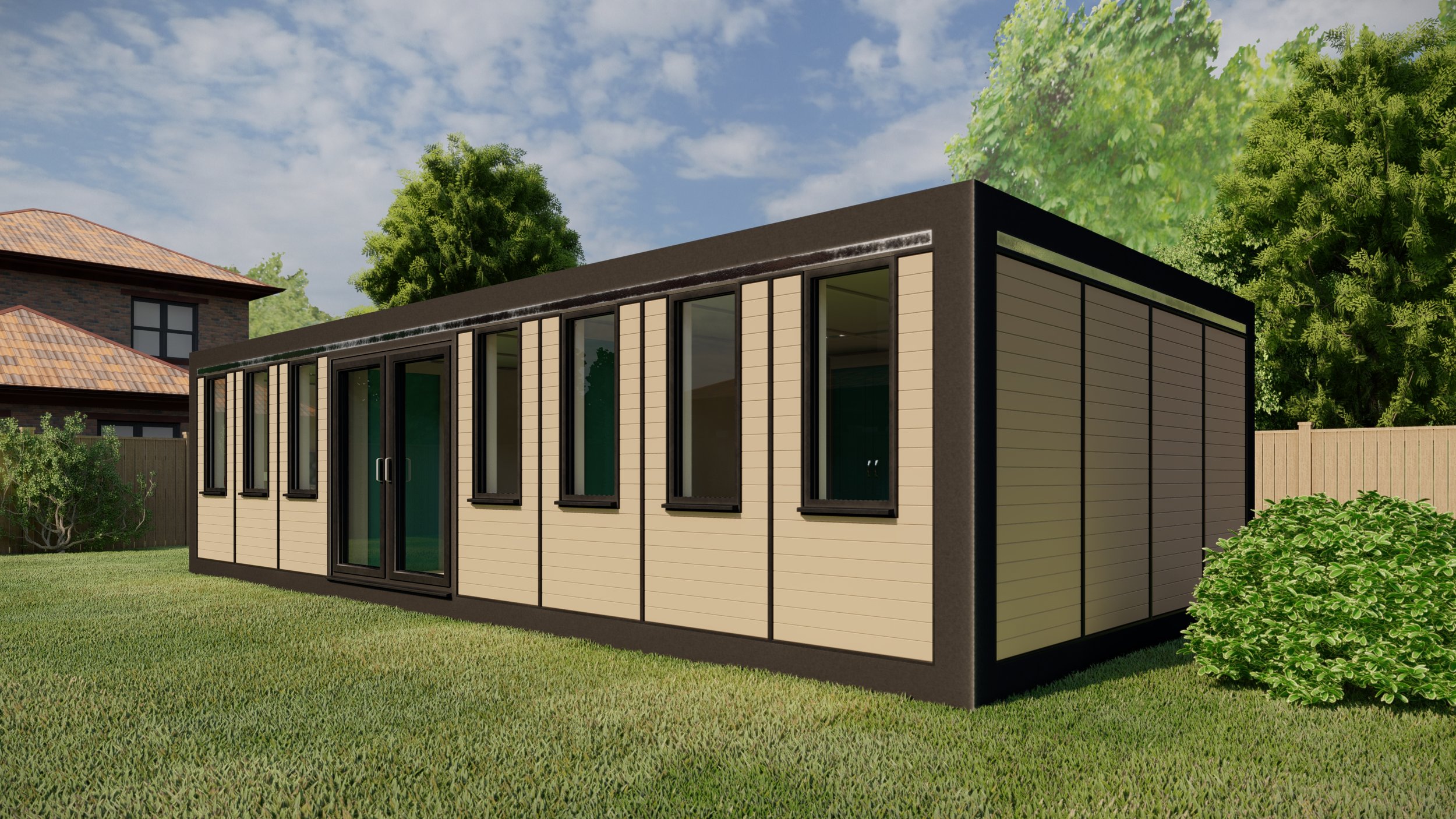
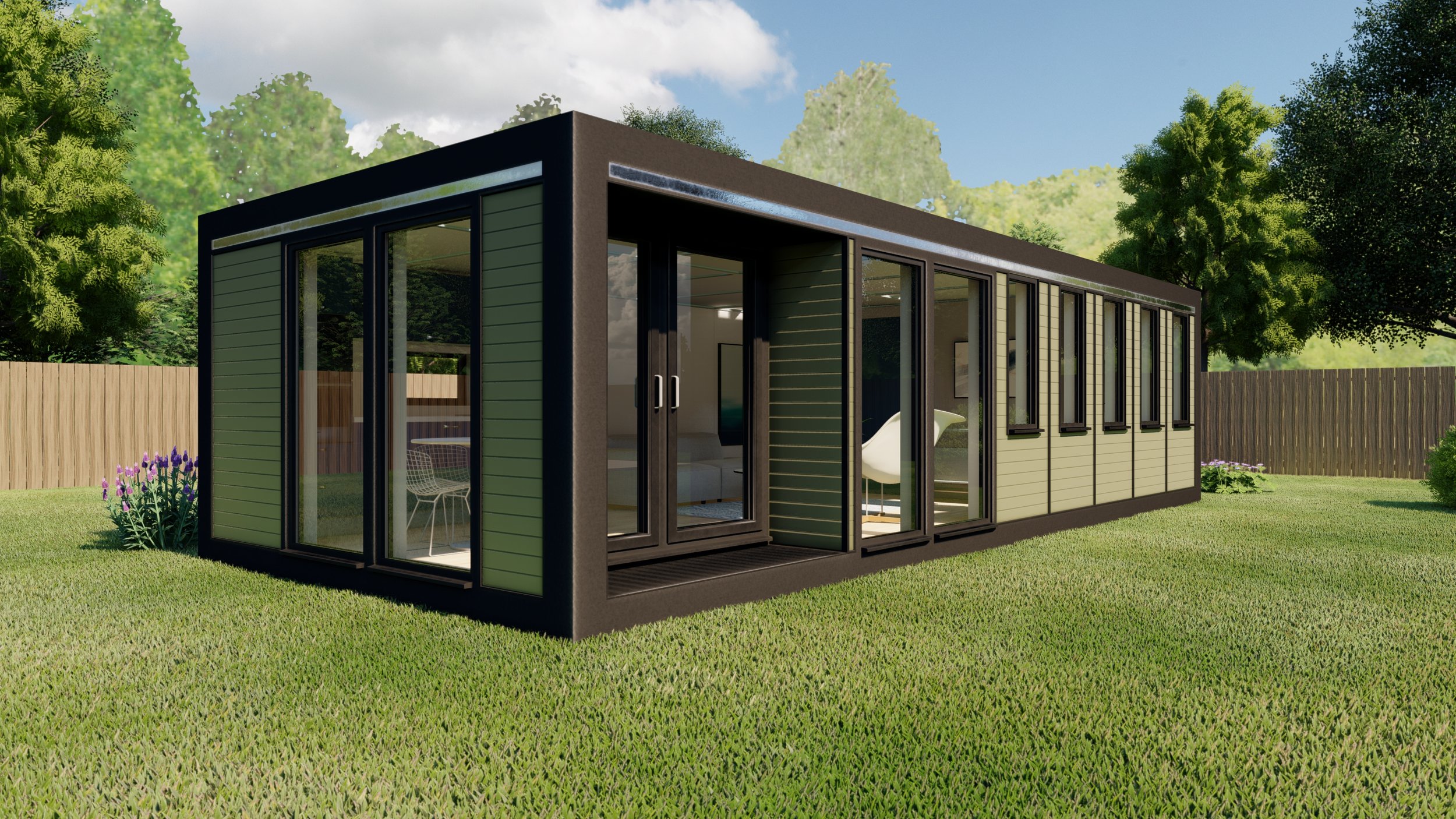
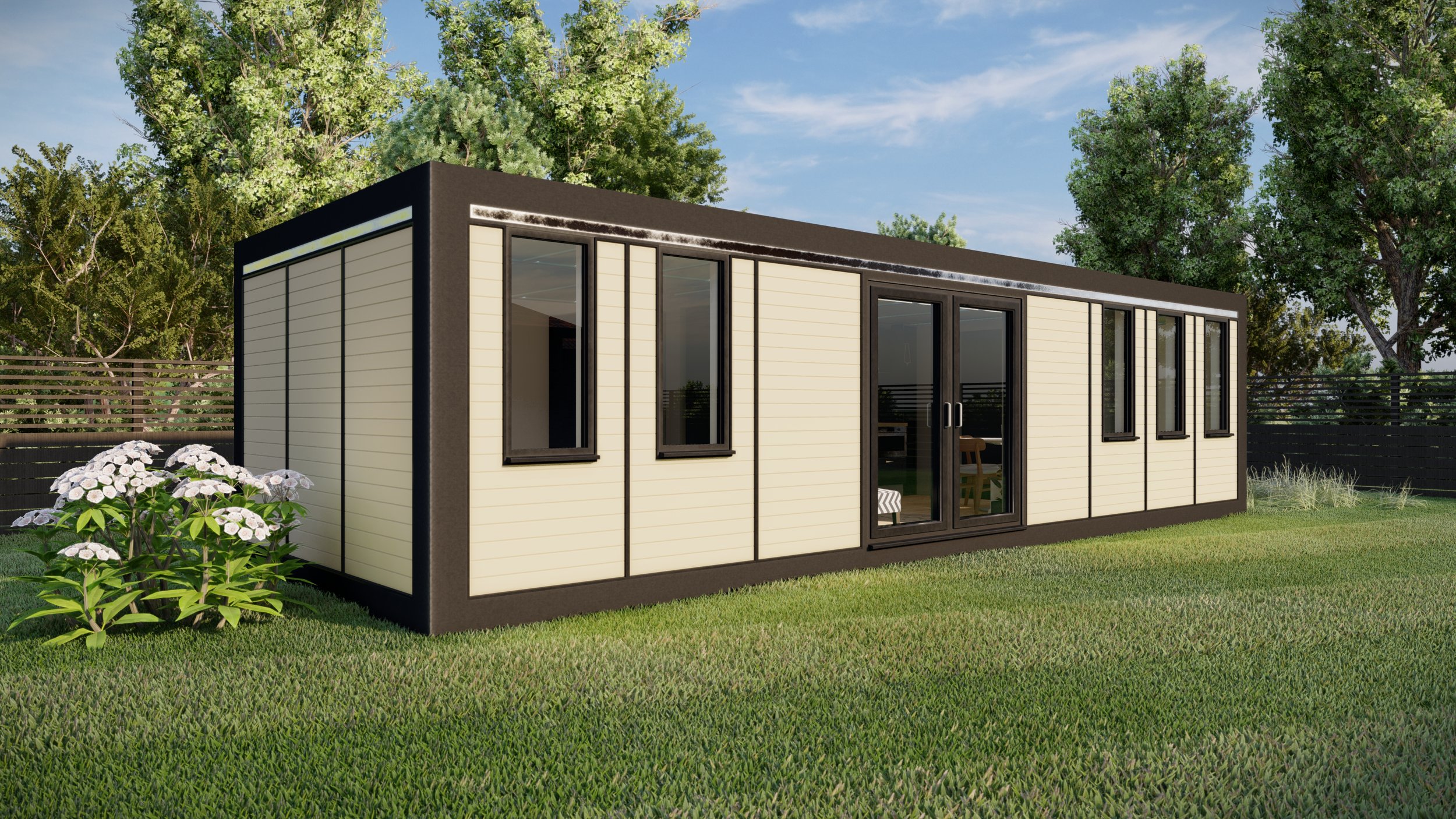
A granny annexe is a fully self-contained home built in the garden of a family member's property. It has its own front door, kitchen, bathroom, bedroom and living space. The person living in it is completely independent, but family is just a few steps away.
This is not a shed, a conversion or a garden room. A purpose-built modular annexe from a specialist manufacturer is a proper home, built to the same insulation and structural principles as a new build house. Garden Annexes builds each one to 222mm wall thickness with 100mm insulation throughout, making them warm, quiet and comfortable in every season.
The cost starts from £85,000 fully installed, which includes the building, kitchen, bathroom, foundations, all utility connections, decoration and council certification. Compare that to care home fees of £35,000 to £55,000 every single year, and the financial case becomes very clear.
2. Live-In Care
Live-in care involves a professional carer moving into the family home to provide support around the clock. It can work well for people who need significant daily assistance and prefer to remain in their own home.
The cost is typically between £800 and £1,500 per week depending on the level of care required. That is between £40,000 and £78,000 a year. And unlike a garden annexe, there is nothing to show for it at the end.
3. Moving in With Family
Many families consider having an elderly parent move into the family home directly. This can work well in the short term but often creates tension over time. A lack of privacy for both parties, changes to the family dynamic and the sheer practicalities of sharing a home can put strain on even close relationships.
A garden annexe solves this problem completely. The elderly person has their own home and their own space, while remaining close enough for family to check in, share meals and provide support whenever it is needed.
4. Sheltered Housing
Sheltered housing provides self-contained flats or bungalows within a managed development, usually with a warden on call. It suits older adults who are largely independent but want the reassurance of having support nearby.
The downside is that it takes a person away from their family and community, often to a different area entirely. Monthly service charges can also be significant.
5. Home Adaptations
For people in the early stages of needing support, adapting the existing home with grab rails, stairlifts, wet rooms and level access can extend independence significantly. Grants are sometimes available through local councils for people on lower incomes.
This works well as a first step but has its limits. As care needs increase, a more substantial solution is usually needed.
6. Day Care and Respite Care
Day care centres provide activities, social contact and support during the day, while the person returns home in the evenings. Respite care offers short-term stays in a care facility to give family carers a break.
These are useful supplements rather than alternatives. They work best alongside another primary solution rather than as a standalone arrangement.
Why a Garden Annexe Is the Best Alternative to a Care Home
Of all the alternatives to care homes available in the UK, a self-contained garden annexe is the one that most genuinely replicates the benefits of independent living while keeping family close.
Full independence. The person has their own front door, their own routine and complete privacy. There is no loss of autonomy.
Family nearby. Whether it is a shared meal, a morning cup of tea or an emergency, help is always close.
One fixed cost. Rather than ongoing care home fees, a garden annexe is a one-off investment that adds value to the property.
Designed for accessibility. Garden Annexes can incorporate wider doorways, wet rooms, level access and other accessibility features at the design stage.
A real home. Not a room in a facility. A proper home, decorated and personalised to the person living in it.
Garden Annexes builds compact one-bedroom annexes from £85,000 fully installed, including the building, kitchen, bathroom, foundations, connections and council certification. There are no hidden extras.
What Is Alternative Care?
Alternative care is a broad term that refers to any arrangement that provides support for an elderly person outside of a traditional residential care home setting. It includes live-in care, sheltered housing, home adaptations and self-contained annexes.
The NHS and local councils actively promote alternative care arrangements because they tend to produce better outcomes for older adults while reducing the pressure on the care home system. A garden annexe is one of the most effective forms of alternative care available in the UK.
Does a Granny Annexe Need Planning Permission?
In most cases, no. Garden Annexes installs the majority of projects using a Lawful Development Certificate rather than full planning permission. This is a simpler, faster process that confirms from the council that the annexe is legal to install and use as part of the main home.
Garden Annexes manages the entire Lawful Development Certificate application on your behalf, with a 96% success rate. It is included in the turn-key price.
How Long Does It Take to Build a Granny Annexe?
From first conversation to move-in, most projects complete in six to seven months. That includes the design stage, council certification, manufacturing and installation. The on-site build phase is typically only four to five weeks.
You can visit the Garden Annexes display area near Bury St Edmunds to walk through a fully built annexe before you make any decisions. Three models are on permanent display, open seven days a week by appointment.
Frequently Asked Questions
-
The main alternatives to care homes in the UK are self-contained garden annexes, live-in care, sheltered housing, home adaptations, moving in with family and day care or respite care services. Of these, a purpose-built garden annexe is the option that best preserves independence while keeping elderly people close to their families.
-
A garden annexe from Garden Annexes starts from £85,000 fully installed. The average care home in the UK costs between £35,000 and £55,000 per year. Over two to three years, a garden annexe is more cost-effective, and unlike care home fees it represents a lasting investment in your property.
-
Yes. Garden Annexes can incorporate level access, wider doorways, wet rooms with grab rails and other accessibility features at the design stage. It is much easier to build these in from the start than to adapt later.
-
Alternative care refers to any arrangement that provides support for an elderly person outside of a traditional residential care home. It includes live-in care, home adaptations, sheltered housing and self-contained annexes. A garden annexe is widely considered one of the most effective forms of alternative care because it preserves full independence while keeping family close.
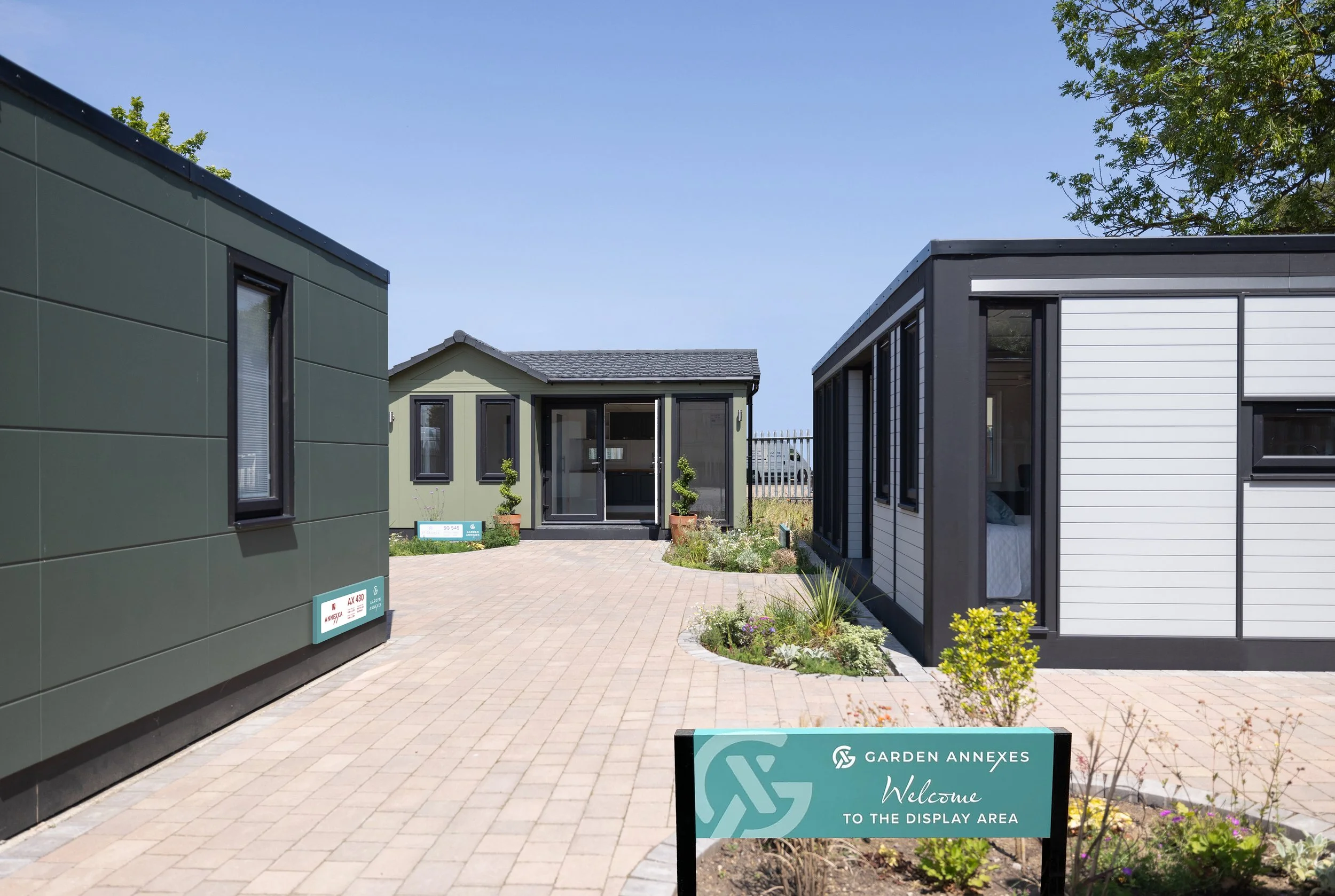
Walk through a real annexe near Bury St Edmunds
Three fully built homes on permanent display. Or download the full 2026 brochure with every range, size and layout in one place.
Featured